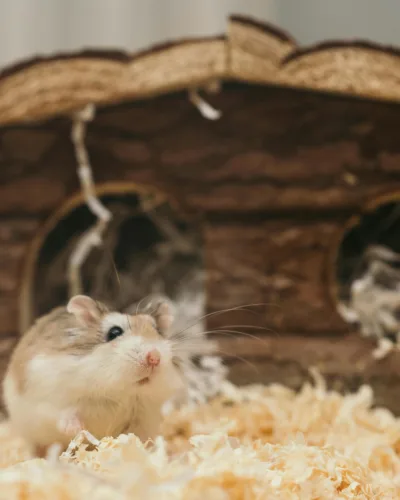
Have you noticed your hamster spending a lot of time burrowing into its bedding? You might be wondering why it does this, whether it’s normal, and how you can support this behaviour. Don’t worry – I’ll cover all of that in this short blog post!

Why Do Hamsters Burrow?
So why is your hamster burrowing? As a prey species, burrowing helps hamsters hide from potential predators, feel safe, sleep undisturbed, and store food. In the wild, it even protects them from extreme weather conditions.
Even though your pet hamster lives in a safe environment, it still has an innate need to burrow to express normal, natural behaviours. So next time you see your hamster digging away, it’s best to leave them undisturbed—they’re just doing what hamsters are meant to do!
Hamsters are crepuscular, meaning they’re mostly active at dawn and dusk. That means sleeping during the day is completely normal.
How Deep Can Hamsters Burrow?
Hamsters can burrow up to 3 feet deep in the wild! While some species enjoy burrowing more than others, it’s generally recommended to provide at least 9–12 inches of bedding in their enclosure. This lets them build proper burrows and tunnels.
Unfortunately, many commercial cages don’t support that much bedding—most only allow for around 4 inches. That’s why many hamster owners opt for DIY cages, the IKEA Detolf, or even repurposed fish tanks to provide the right depth and space.
Best Bedding for Hamsters
So what’s the best bedding for burrowing? You may see wood shavings or paper bedding sold in stores. While wood shavings aren’t necessarily unsafe, many hamster owners prefer paper bedding. In the UK, Carefresh is one of the most accessible and popular options.
Paper bedding tends to be:
- Less dusty
- Softer and cozier
- Easier to clean
- Better at holding burrow structures than wood shavings
If your hamster is a big burrower, paper bedding may be your best bet.
Should I Leave My Hamster’s Burrows Alone?
Yes, as much as possible! Hamsters can become very stressed when their burrows are destroyed. This is why frequent full cage cleans are not recommended. Instead, many owners simply perform spot cleans to remove soiled areas while keeping the burrows intact.
This method works best with larger cages, which get dirty less quickly and help reduce the need for full clean-outs. Smaller cages tend to get smelly and messy faster, requiring more frequent cleaning—which can disturb your hamster and undo all their hard work.