A rabbit’s diet is one of the most challenging parts of their care—and if you’re not sure why, then this blogs for you. If you currently have rabbits (or want them) and aren’t sure what a good diet looks like, don’t worry! I’m going to break everything down step by step.
What Does a Healthy Rabbit Diet Look Like?
A rabbit’s diet can be divided into four main categories:
- Hay – 80%
- Fresh Vegetables – 10%
- Pellets – 5%
- Treats – 5%
Hay (80%)
Hay is by far the most important part of your rabbit’s diet. It helps maintain a healthy digestive system and keeps their teeth at the right length. The best type for your rabbit is timothy hay because it’s high in fibre, but you can mix in oat and meadow hay for variety—especially if your rabbit can be picky.
When you think of hay, you might imagine the brown, dusty stuff from farms, but high-quality hay should be green and fresh-smelling. I’ve noticed a big difference in my rabbits’ appetites when offering supermarket hay versus premium-quality hay.
Fresh Vegetables (10%)
Next up: fresh veg. Rabbits can eat a wide range of veggies, but some are healthier than others. Leafy greens and herbs are best. While some owners completely avoid fruit due to its high sugar content and the potential to make your rabbits fussy, I personally think it’s fine as an occasional treat, just in very small amounts.
We’ll cover which vegetables are best shortly, but the key is to keep fruit minimal and focus on nutrient-rich greens.
Pellets (5%)
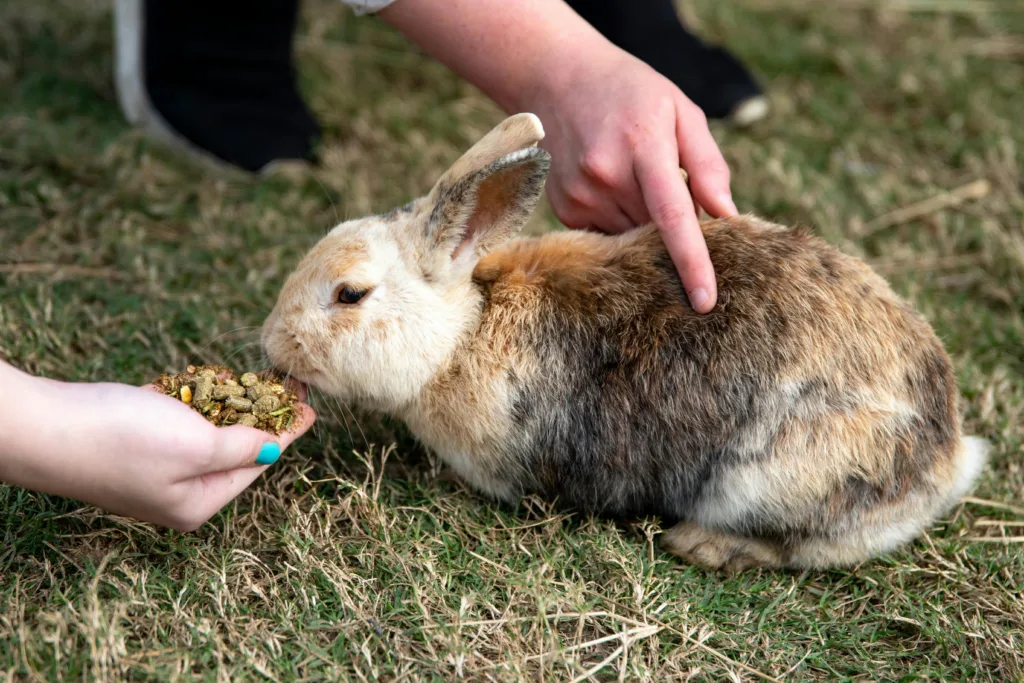
Pellets are the least important part of the diet, but many rabbits love them. Be cautious though—don’t blindly follow the feeding guide on the bag. These often suggest overfeeding so you have to go back quickly and buy another bag!
Giving your rabbit too many pellets can cause digestive issues like gut stasis and soft stools. Softer stools can attract flies which can lead to flystrike, a potentially deadly condition. Stick to about 20g (or 1 egg cup) per kg of body weight daily.
Choose high-quality pellets, and avoid muesli-style mixes, which promote selective eating (where they only eat the bits of food they enjoy—like a kid leaving out their vegetables).
Treats (5%)
Rabbits love treats, but many store-bought options contain unhealthy fillers, cereals, or added sugars. Always check the ingredients list.
My personal favorite? Science Selective Meadow Loops – they’re mostly timothy hay, and my bunnies go crazy for them.
Why Is the Rabbit Diet So Important?
Rabbits have a very sensitive digestive system and can’t vomit. If something upsets their stomach, their gut can slow down or stop entirely—a condition called gut stasis. This can be fatal within 24–48 hours if not treated quickly.
Because rabbits are prey animals, they often hide signs of illness, which makes early detection tricky. I know something’s wrong if my food-obsessed rabbits suddenly stop eating or ignore treats. As a general rule: if your rabbit is acting unusually, contact a vet immediately.
Treatment for gut stasis can also be costly—when I took my rabbit to the vet it cost me £1,000, though I claimed £900 back with insurance, so make sure your rabbits are insured!
What Fruits and Veggies Can Rabbits Eat?
There’s a wide range of safe options, but always double-check unfamiliar foods. I love giving mine herbs like mint and basil, which are easy to grow at home.
Rabbits can also enjoy lettuce like cos or little gem, but never give iceberg lettuce—it’s toxic to them. Veg like cucumber are fine, but some greens like parsley and spinach are high in oxalic acid, which can lead to potential health problems, so they should only be fed occasionally.
Now you might find a lot of conflicting information online about what veggies can be given to rabbits regularly. So what I would suggest is trying to give them a slightly different variety everyday, so you aren’t overdoing it with a specific veg. Generally, lettuces like romain are the most safe to be given daily.
Examples of My Favourite Rabbit-Safe Vegetables
Daily Veggies:
- Romaine lettuce
- Little Gem lettuce
- Coriander
- Basil
Occasional Veggies:
- Cabbage
- Spinach
- Parsley
- Kale
- Bell peppers
- Rocket (arugula)
- Mint
- Bok Choy
- Cucumber