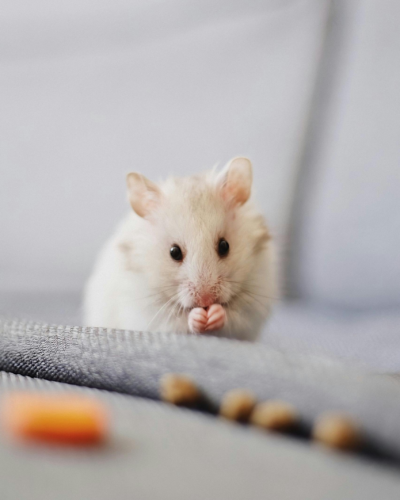
Are you considering getting a hamster but wondering how long they will live? Or perhaps you have one right now and want to know how much time you have with them.
Well the answer depends on a few factors – the hamster breed and the level of care they are provided with. Also, if hamsters are purchased from an irresponsible breeder, this may significantly shorten their life span due to genetic problems.
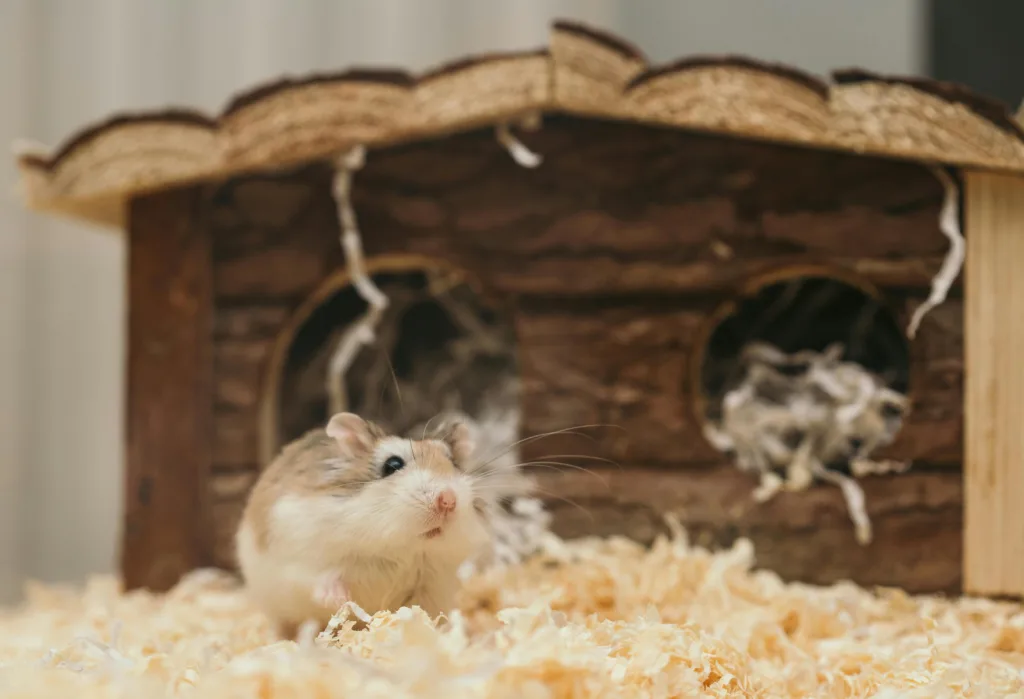
On average, hamsters live between 2 and 3 years, with some surpassing this. To better understand your hamster and how to give them the healthiest, longest life possible, let’s dig into a few key factors.
Breed: The most common pet hamsters are Syrians and dwarf varieties (Russian, Chinese, and Roborovski). Syrians usually live for 2 – 3 years, though the oldest recorded one reached 4.5. Dwarfs generally live a bit longer, with Roborovskis averaging 3 – 3.5 years, and some dwarf hamsters even living up to 5 years!
Care: If your hamster is kept in too small a cage, poor diet, lack of enrichment or inappropriately housed with another hamster. Then you can expect its average life span to be significantly less.
So what does proper hamster care look like?
- Please ensure that your cage is appropriately sized. In the UK, the RSPCA recommends a minimum cage size of at least 100cm x 50cm (or roughly 40 inches x 20 inches). But bigger is definitely better, many of the commercially available cages are far too small so always make sure to check the dimensions before purchasing.
- Giving your hamster a low quality food, too much/too little food or feeding a dwarf variety anything with added sugar will also impact your hamster’s life span. Since dwarfs are so small their bodies cannot process the sugar so please be careful with what treats you feed them and fruit should be given only in moderation.
- A lack of enrichment will also impact your hamster’s health. Generally, hamsters like a very busy cage, I’d recommend looking up “natural hamster cage” if you would like some inspiration. When I worked at a pet store, I often saw cages that were far too bare—just a thin layer of bedding, a small wheel, and a food bowl. Try to avoid this. Instead, give your hamster plenty of burrowing opportunities with thick layers of bedding, plenty of variety of toys and an appropriate sized wheel (9-12 inches for a Syrian).
- Syrians are a completely solitary species, once they reach sexual maturity they cannot be housed with another, even letting Syrians interact could lead to fatality. Dwarfs can technically live with their own kind but it is strongly discouraged to do so unless you are an expert or have a lot of experience with the breed. Keeping them housed together can potentially lead to injury or even death.
- Please also make sure to regularly health check your hamster and take them to the vet if you notice any abnormalities.
So to summarise, your hamster will likely live anywhere between 2 – 4 years depending on breed and the care you are providing it. On average dwarves live longer. There are things you can do to potentially increase your hamster’s life span. Ensure that you have a good size cage and your hamster is getting an appropriate diet. Also, ensure that you are providing adequate enrichment for your hamster, through toys, sand baths, bedding and more.