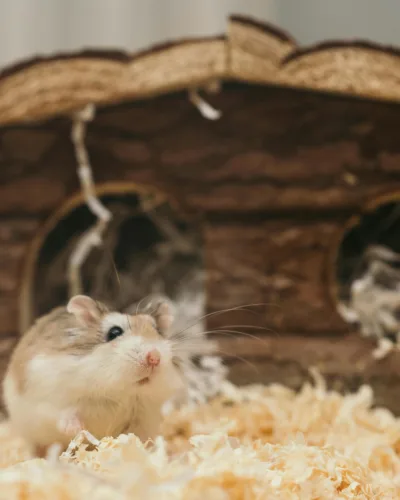
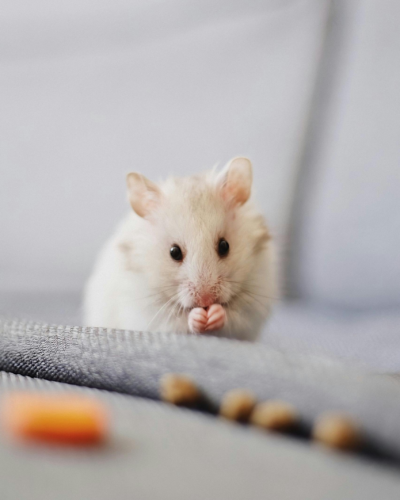
If you’re considering getting a small animal, you’ve probably come across both hamsters and gerbils and might be wondering what the difference is. Although similar in size, these two animals have distinct needs and personalities that are important to consider.
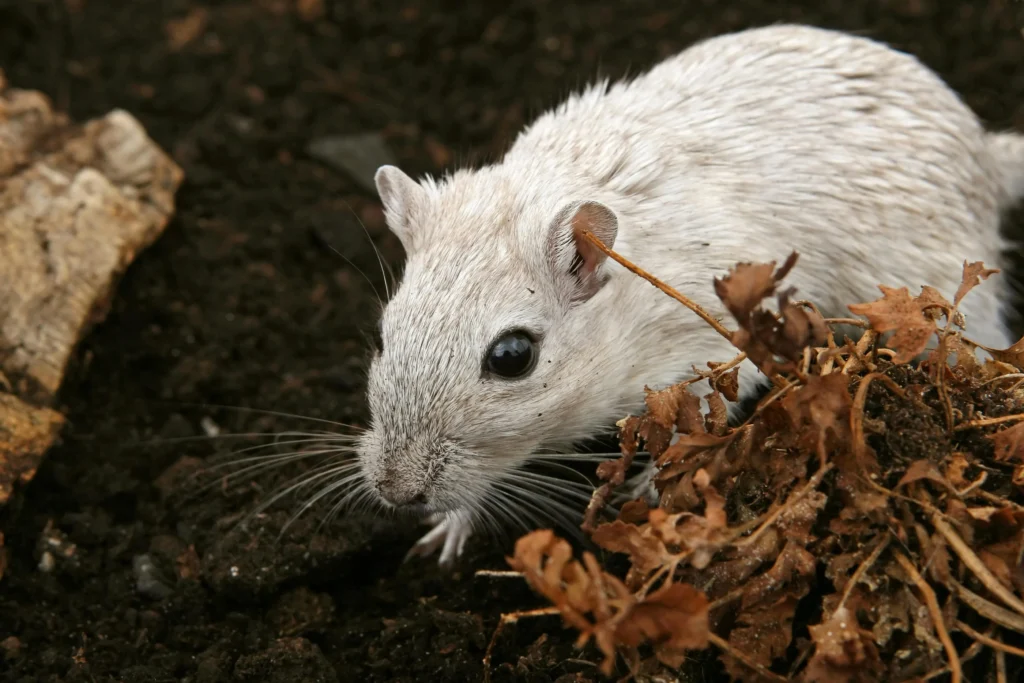
Hamster Cage vs. Gerbilarium
You’ve likely seen a standard hamster cage before, but a gerbilarium (a habitat designed for gerbils) differs in one key way: it’s much deeper. Gerbils are natural burrowers and love digging deep tunnels—an instinct that comes from their need to hide from predators.
While hamsters also enjoy burrowing and need at around 6 – 9 inches of bedding, gerbils require even more depth for tunneling, 10 – 12 inches. Always aim to provide the largest enclosure possible. Many pet store cages are far too small and can lead to stress and boredom.
- RSPCA guidelines:
- Hamsters: Minimum cage size of 100 cm x 50 cm
- Gerbils: Gerbilarium with at least 20–30 cm of burrowing depth
Companionship
There is a major difference between the two:
- Gerbils are social animals and must be kept in pairs or groups to thrive.
- Syrian hamsters, on the other hand, are strictly solitary and will fight if housed with others.
- Dwarf hamsters can sometimes live in pairs, but this is tricky and not always successful.
So, if you’re considering gerbils, be prepared to get at least two.
Diet
Although hamster and gerbil food may look similar, their nutritional needs differ slightly:
- Hamsters generally eat more fat and fibre in their diet.
- Gerbils are prone to obesity, so watch their fat and protein content.
- Dwarf hamsters are prone to diabetes, so you need to be careful with their sugar intake.
Both are omnivores and can eat:
- A complete pellet-based food
- Fruits and vegetables
- Occasional insects
Avoid muesli-style mixes as their main diet component, as these often lead to selective feeding—where your pet picks out the tastiest bits and leaves the rest, missing essential nutrients. However, you could mix in a little bit of high quality muesli mix for a bit of added variety.
Life Expectancy
- Hamsters: Typically live for 2–4 years, depending on the breed and care. Dwarf hamsters often live longer than Syrians.
- Gerbils: Generally live for 3–5 years.
Handling and Temperament
Handling ease depends on the individual animal, but here are some general traits:
- Syrian hamsters are usually the easiest to tame and may calmly sit on your hand—but they can also be more likely to bite (and it can hurt!).
- Dwarf hamsters are less bitey but much faster, making them harder to handle.
- Roborovskis (type of dwarf hamster) are especially hard to tame and are small but fast.
- Gerbils are also fast and flighty, but their social nature tends to make them easier to tame.
Physical Differences
- Both animals have tails—never pick them up by the tail as it can cause serious injury.
- Gerbils have a longer tail, are smaller than Syrian hamsters, but larger than dwarf hamsters.
Costs
The initial cost of owning either a hamster or gerbil is fairly similar:
- Expect to spend around £100 for setup, the most expensive part being the enclosure.
- Both require:
- Bedding
- Enrichment (toys, tunnels, etc.)
- Food
Neither species needs vaccinations, but unexpected vet bills can arise, so it’s a good idea to register with an exotics-specialist vet.